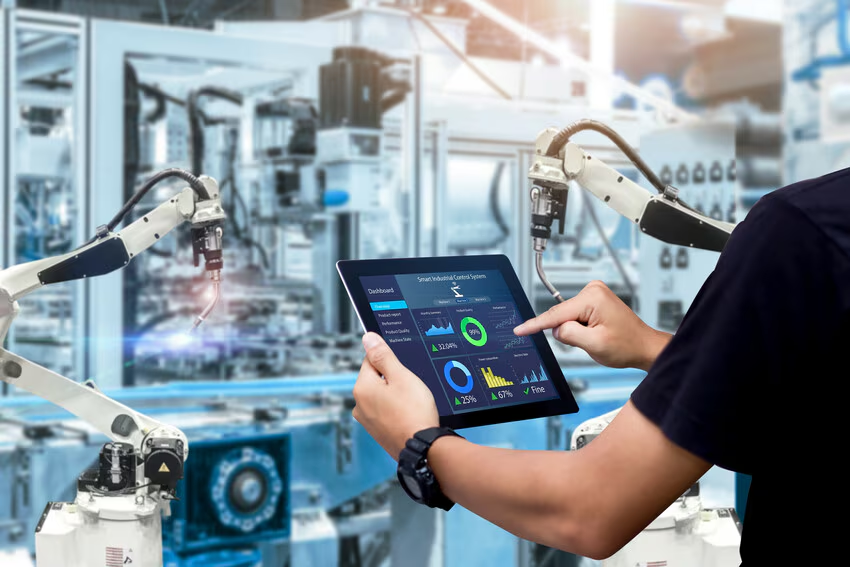
The Future of Sewage Treatment Plants: Why Smart STPs Are Replacing Manual Systems
The sewage treatment industry is experiencing a technological revolution. As cities grow and environmental regulations become stricter, traditional manual sewage treatment plants are struggling to keep pace with modern demands. Enter smart STPs—automated, data-driven systems that are transforming wastewater management across the globe.
What Are Smart STPs?
Smart STPs (Sewage Treatment Plants) integrate advanced technologies like IoT sensors, artificial intelligence, automated controls, and real-time monitoring systems to optimize wastewater treatment processes. Unlike conventional manual systems that require constant human oversight, smart STPs can self-regulate, predict maintenance needs, and ensure consistent treatment quality with minimal intervention.
These intelligent systems represent a fundamental shift from reactive to proactive sewage management, offering unprecedented efficiency and reliability.
The Limitations of Manual Sewage Treatment Systems
Traditional sewage treatment plants have served communities for decades, but they come with significant drawbacks that are becoming increasingly difficult to ignore:
High Operational Costs: Manual STPs require round-the-clock staffing for monitoring, testing, and adjustments. Labor costs continue to rise while budgets remain constrained.
Inconsistent Treatment Quality: Human operators can miss critical changes in water quality parameters, leading to treatment failures and potential environmental violations. Manual testing provides only periodic snapshots rather than continuous insights.
Slow Response Times: When issues arise in manual systems, detection and correction can take hours or even days. By the time operators notice a problem, significant volumes of inadequately treated water may have already been discharged.
Limited Data Collection: Manual systems generate minimal operational data, making it difficult to identify trends, optimize processes, or plan preventive maintenance effectively.
Compliance Challenges: Meeting increasingly stringent environmental regulations requires precise documentation and consistent performance—areas where manual systems often fall short.
How Smart STPs Are Revolutionizing Wastewater Treatment
The transition to smart STPs addresses these challenges head-on through intelligent automation and data-driven decision-making:
Real-Time Monitoring and Control
Smart STPs employ networks of sensors that continuously measure critical parameters including pH levels, dissolved oxygen, turbidity, BOD, COD, and flow rates. This constant stream of data enables immediate adjustments to treatment processes, ensuring optimal performance at all times.
When water quality deviates from preset parameters, automated control systems make instant corrections—adjusting chemical dosing, aeration rates, or flow patterns without waiting for human intervention.
Predictive Maintenance
Using machine learning algorithms, smart STPs analyze equipment performance patterns to predict failures before they occur. Pumps, blowers, and other critical components send early warning signals when performance degrades, allowing maintenance teams to address issues during planned downtime rather than dealing with costly emergency repairs.
This predictive approach can reduce maintenance costs by up to 30% while extending equipment lifespan significantly.
Energy Optimization
Wastewater treatment is notoriously energy-intensive, with aeration systems alone consuming up to 60% of a plant's electricity. Smart STPs use AI-driven algorithms to optimize energy consumption by adjusting processes based on real-time demand, time-of-day electricity pricing, and treatment requirements.
Many smart STPs have achieved energy reductions of 20-40% compared to their manual counterparts while maintaining superior treatment quality.
Remote Monitoring and Management
Operators can access smart STP dashboards from anywhere via mobile apps or web platforms. This remote visibility means fewer site visits, faster response to alerts, and the ability for expert technicians to troubleshoot issues without traveling to the facility.
For organizations managing multiple treatment facilities, centralized monitoring allows a small team to oversee operations that would traditionally require dozens of on-site staff.
Enhanced Compliance and Reporting
Smart STPs automatically log all operational data, creating comprehensive digital records that simplify regulatory reporting. When authorities require documentation of treatment performance, operators can generate detailed reports with a few clicks rather than compiling manual logs and test results.
This automated documentation not only saves time but also provides irrefutable evidence of compliance during inspections or audits.
👉 Schedule a Meeting


Real-World Benefits: The Business Case for Smart STPs
Organizations that have adopted smart STPs report impressive returns on investment:
Cost Savings: While initial investment is higher, smart STPs typically achieve payback within 2-4 years through reduced labor costs, lower energy consumption, decreased chemical usage, and fewer emergency repairs.
Improved Reliability: Automated systems maintain consistent treatment quality regardless of staffing challenges, holidays, or shift changes. Many smart STPs operate at 99%+ uptime compared to 85-90% for manual systems.
Scalability: As treatment demands grow, smart STPs can often handle increased loads through optimization rather than requiring expensive infrastructure expansion.
Environmental Performance: Better process control means fewer discharge violations, reduced environmental impact, and improved public health outcomes.
Staff Empowerment: Rather than replacing workers, smart STPs transform operators from manual laborers into skilled technicians who manage sophisticated systems and make strategic decisions based on data insights.
Key Technologies Powering Smart STPs
The intelligence behind modern sewage treatment comes from several converging technologies:
Internet of Things (IoT): Networked sensors provide continuous data streams from every stage of the treatment process, creating a comprehensive digital twin of plant operations.
Artificial Intelligence and Machine Learning: Advanced algorithms identify patterns, optimize processes, and predict outcomes with accuracy that improves over time.
Cloud Computing: Secure cloud platforms enable data storage, advanced analytics, and remote access from any location.
SCADA Systems: Supervisory Control and Data Acquisition systems provide the backbone for monitoring and controlling treatment processes automatically.
Mobile Technology: Smartphone apps give operators instant access to plant performance data and alert notifications wherever they are.
Overcoming Adoption Barriers
Despite clear advantages, some organizations hesitate to transition from manual to smart STPs. Common concerns include:
Initial Investment: Smart STP technology requires upfront capital, but numerous financing options, government incentives, and the rapid payback period make adoption economically viable for most organizations.
Technical Expertise: Modern smart STPs feature intuitive interfaces that don't require advanced technical degrees. Most operators adapt quickly with basic training, and vendors typically provide ongoing support.
Cybersecurity: Reputable smart STP providers implement robust security measures including encryption, secure authentication, and regular security updates to protect systems from cyber threats.
Integration with Existing Infrastructure: Many smart STP solutions can be retrofitted to existing plants, allowing gradual upgrades rather than complete replacement.
The Road Ahead: Future Innovations in Smart STPs
The evolution of smart STPs continues to accelerate. Emerging developments include:
Advanced AI Capabilities: Next-generation systems will predict treatment outcomes days in advance, enabling proactive adjustments for anticipated changes in influent characteristics.
Blockchain for Compliance: Immutable blockchain records may soon provide tamper-proof documentation of treatment performance for regulatory purposes.
Integration with Smart Cities: Smart STPs will connect with broader urban infrastructure systems, coordinating with stormwater management, water distribution, and energy grids for holistic resource management.
Resource Recovery: Future smart STPs will maximize recovery of valuable resources from wastewater, including nutrients for fertilizer, biogas for energy, and reclaimed water for non-potable applications.
Zero Liquid Discharge: Advanced smart systems are approaching the goal of complete water recovery with minimal waste generation, particularly important in water-scarce regions.
Making the Transition to Smart STPs
For organizations considering the shift from manual to smart systems, a phased approach often works best:
-
Assessment: Evaluate current operations, identify pain points, and establish baseline performance metrics
-
Pilot Implementation: Start with critical monitoring points or single treatment processes to demonstrate value and build confidence
-
Gradual Expansion: Incrementally add sensors, controls, and automation as benefits become evident and staff gain comfort with new technologies
-
Full Integration: Connect all systems into a unified platform for comprehensive smart STP capabilities
-
Continuous Improvement: Leverage accumulated data to refine processes and maximize performance over time