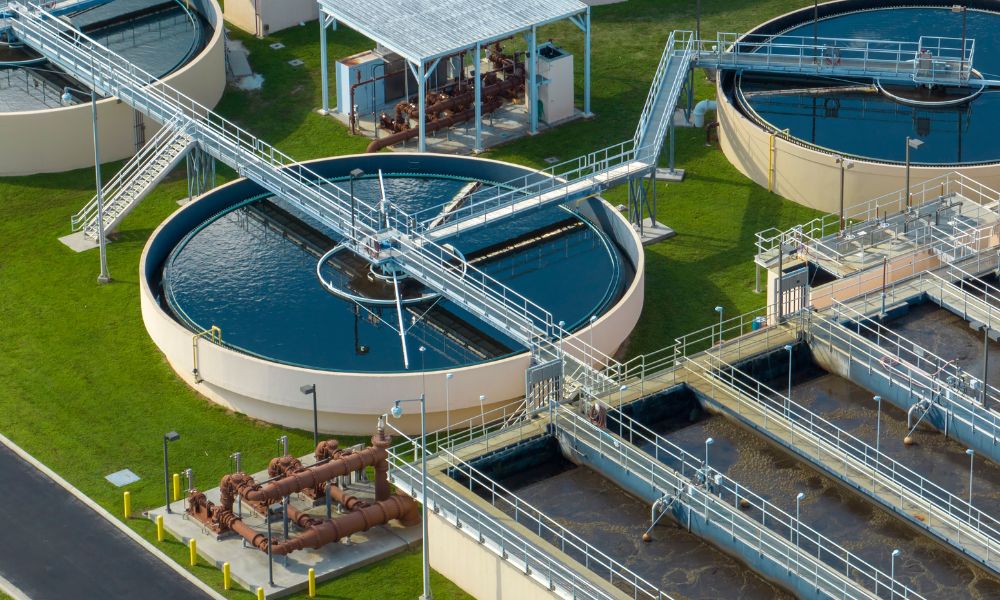
How Does a STP Plant Work? A Complete Guide to Sewage Treatment
Understanding STP Plant Operations
An STP plant (Sewage Treatment Plant) is a facility designed to remove contaminants from wastewater and convert it into effluent that can be safely returned to the environment or reused. Understanding how a STP plant works is essential for appreciating modern sanitation systems and their role in protecting public health and the environment.
What Happens Inside a STP Plant?
A STP plant processes millions of liters of wastewater daily through a series of physical, biological, and chemical treatment stages. The primary goal is to remove solid waste, organic matter, harmful bacteria, and chemical pollutants before the water is discharged or recycled.
The Four Main Stages of STP Plant Treatment
Stage 1: Preliminary Treatment (Screening and Grit Removal)
The first step in how a STP plant works involves removing large debris and heavy particles from incoming sewage.
Screening Process: Wastewater first passes through bar screens that capture large objects like plastics, rags, sticks, and other debris. Modern STP plants use automated mechanical screens that continuously remove and compact this material.
Grit Removal: After screening, the wastewater flows into grit chambers where sand, gravel, and other heavy particles settle to the bottom. These grit chambers use controlled flow rates to allow dense materials to sink while keeping organic matter suspended. This protects downstream equipment from abrasion and prevents accumulation in treatment tanks.
Stage 2: Primary Treatment (Sedimentation)
Primary treatment in a STP plant focuses on settling suspended solids through gravity.
Primary Clarifiers: Wastewater enters large circular or rectangular tanks called primary clarifiers or sedimentation tanks. Here, the flow velocity decreases dramatically, allowing suspended solids to settle to the bottom as "primary sludge" while oils and grease float to the surface as "scum."
Removal Efficiency: Primary treatment typically removes 50-70% of suspended solids and 25-40% of BOD (Biochemical Oxygen Demand) from the wastewater. Mechanical scrapers continuously collect settled sludge and surface skimmers remove floating materials.
The clarified wastewater then moves to secondary treatment, while the collected sludge undergoes separate processing.
Stage 3: Secondary Treatment (Biological Treatment)
This is where the biological magic happens in a STP plant. Secondary treatment uses microorganisms to break down dissolved and colloidal organic matter.
Activated Sludge Process: The most common method in STP plants involves the activated sludge process. Here's how it works:
-
Aeration Tank: Clarified wastewater from primary treatment enters an aeration tank where it's mixed with "activated sludge" containing billions of beneficial bacteria and microorganisms.
-
Air Supply: Powerful aerators or diffusers pump oxygen into the tank, creating an aerobic environment. These bacteria consume organic pollutants as food, converting them into carbon dioxide, water, and more bacterial cells.
-
Biological Activity: The microorganisms form clumps called "flocs" that absorb and digest organic matter. This biological action can remove 85-95% of remaining BOD and suspended solids.
-
Secondary Clarifier: The mixture then flows to another settling tank where the bacterial flocs settle to the bottom. Most of this settled "secondary sludge" is returned to the aeration tank to maintain the bacterial population (activated sludge), while excess sludge is removed for further treatment.
Alternative Secondary Treatment Methods:
-
Trickling Filters: Wastewater trickles over media covered with bacterial biofilm
-
Rotating Biological Contactors (RBC): Discs rotate through wastewater, providing bacterial growth surfaces
-
Membrane Bioreactors (MBR): Combine biological treatment with membrane filtration for superior effluent quality
-
Sequential Batch Reactors (SBR): Treat wastewater in timed batch sequences within a single tank
Stage 4: Tertiary Treatment (Advanced Treatment)
Modern STP plants often include tertiary treatment to produce even higher quality effluent, especially when water reuse or sensitive discharge environments are involved.
Filtration: Sand filters, multimedia filters, or membrane systems remove remaining suspended particles, producing crystal-clear water.
Nutrient Removal: Advanced STP plants remove nitrogen and phosphorus to prevent algal blooms in receiving waters:
-
Nitrification-Denitrification: Converts ammonia to nitrogen gas
-
Phosphorus Precipitation: Uses chemical additives to precipitate phosphorus
Disinfection: Before discharge, the treated water undergoes disinfection to eliminate pathogenic microorganisms:
-
Chlorination: Adding chlorine or sodium hypochlorite
-
UV Disinfection: Exposing water to ultraviolet light
-
Ozonation: Using ozone gas for disinfection
Chemical Polishing: Some STP plants add activated carbon treatment to remove trace organic compounds, colors, and odors.
Sludge Treatment: The Other Half of STP Plant Operations
While water treatment gets most attention, sludge management is equally important in how a STP plant works.
Sludge Thickening
Primary and secondary sludge contain 95-99% water. Thickening reduces this volume by allowing more solids to settle or using mechanical methods like centrifuges or belt thickeners.
Sludge Digestion
Anaerobic Digestion: The most common method where bacteria break down organic matter in oxygen-free tanks. This process:
-
Reduces sludge volume by 40-60%
-
Destroys pathogens
-
Produces biogas (methane) that can generate electricity
-
Stabilizes sludge for safe disposal
Aerobic Digestion: Used in smaller STP plants where sludge is aerated to decompose organic matter.
Sludge Dewatering
Digested sludge undergoes dewatering using:
-
Belt filter presses
-
Centrifuges
-
Filter presses
-
Drying beds
This produces "biosolids" with 15-30% solid content that can be:
-
Applied to agricultural land as fertilizer
-
Incinerated for energy recovery
-
Disposed of in landfills
-
Composted for landscaping use
Key Components That Make a STP Plant Work
Pumping Stations
Pumps move wastewater through different treatment stages, especially when gravity flow isn't possible. Variable frequency drives optimize energy consumption.
Aerators and Blowers
These critical components supply oxygen to biological treatment processes. Fine bubble diffusers maximize oxygen transfer efficiency while minimizing energy use.
Clarifiers and Settling Tanks
Large circular or rectangular tanks with mechanical scrapers that collect settled solids for removal.
Control Systems
Modern STP plants use SCADA (Supervisory Control and Data Acquisition) systems that:
-
Monitor treatment parameters in real-time
-
Adjust chemical dosing automatically
-
Control equipment operation
-
Alert operators to problems
-
Generate compliance reports
Laboratory Facilities
On-site labs test samples throughout the treatment process to ensure compliance with discharge standards.
Monitoring Parameters in STP Plant Operations
Operators continuously monitor key parameters to ensure proper functioning:
-
BOD (Biochemical Oxygen Demand): Measures organic pollution
-
COD (Chemical Oxygen Demand): Indicates total organic and inorganic pollution
-
TSS (Total Suspended Solids): Quantity of suspended particles
-
pH: Acidity or alkalinity of wastewater
-
Dissolved Oxygen: Essential for biological treatment
-
MLSS (Mixed Liquor Suspended Solids): Bacterial concentration in aeration tanks
-
Nutrients: Nitrogen and phosphorus levels
-
Fecal Coliforms: Indicator of pathogenic contamination
Energy Consumption in STP Plants
A STP plant is energy-intensive, with aeration typically consuming 45-75% of total energy. Modern plants implement energy-saving measures:
-
High-efficiency blowers and aerators
-
Energy recovery from biogas
-
Solar panels for auxiliary power
-
Optimized pumping schedules
-
Heat recovery systems
Environmental Benefits of STP Plants
Understanding how a STP plant works highlights its environmental importance:
-
Water Resource Protection: Prevents pollution of rivers, lakes, and groundwater
-
Public Health: Eliminates waterborne disease transmission
-
Ecosystem Preservation: Maintains aquatic life by removing toxins
-
Water Reuse: Enables recycling for irrigation, industrial use, and groundwater recharge
-
Resource Recovery: Produces biogas energy and agricultural biosolids
Common Challenges in STP Plant Operations
Fluctuating Loads: Variations in wastewater flow and strength require flexible operations.
Industrial Discharge: Toxic chemicals from industries can disrupt biological treatment.
Aging Infrastructure: Older STP plants need upgrades to meet modern standards.
Operator Expertise: Proper operation requires skilled technicians who understand complex biological and chemical processes.
Odor Control: Managing hydrogen sulfide and other odorous compounds remains challenging.
The Future of STP Plant Technology
Innovation continues to improve how STP plants work:
-
Smart Monitoring: AI and IoT sensors for predictive maintenance
-
Energy Neutrality: Plants generating more energy than they consume
-
Resource Recovery: Extracting valuable materials like phosphorus
-
Decentralized Systems: Smaller, modular STP plants for communities
-
Advanced Membranes: More efficient filtration technologies